Is a Home Addition Worth It in Hopewell Junction, NY?
Is a Home Addition Worth It in Hopewell Junction, NY?
Outgrowing your home does not always mean you need to move. If you love your neighborhood, enjoy your property, and simply need more space, a home addition may be worth considering.
For homeowners thinking about expanding their living space, the decision often comes down to one important question: Is a home addition worth the investment, or would buying a larger home make more financial sense?
The answer depends on your budget, property, long-term plans, and the type of space you want to create. A well-planned addition can improve your home’s functionality, accommodate a growing family, and potentially increase its market appeal. However, construction costs, permits, and resale considerations should all be part of the decision.
If you’re considering a home addition in Hopewell Junction, NY, here’s what you should evaluate before starting your project.
1. When Is a Home Addition Worth It?
A home addition may be a worthwhile investment when your current home no longer meets your needs but moving is not your preferred option.
Here are some situations where expanding your home makes sense:
Your family needs more space. Growing families may need another bedroom, a larger living area, or additional bathrooms. Rather than relocating, an addition can help your home accommodate changing household needs.
You need a dedicated home office. Remote and hybrid work arrangements have made separate workspaces more important. A home office addition can provide privacy, reduce distractions, and create a more comfortable working environment.
You want to accommodate extended family. An in-law suite or accessory dwelling unit may provide additional living space for aging parents or adult family members, depending on local zoning and building requirements.
Your existing layout feels too restrictive. Sometimes the problem isn’t the overall size of your home but how the space is arranged. A thoughtfully designed extension can create a larger kitchen, dining area, family room, or primary bedroom.
You want to stay in your neighborhood. Your home may be close to work, schools, family, and familiar surroundings. Expanding your existing property allows you to maintain those connections while improving your living space.
The most important consideration is whether the additional space will solve a real problem and improve your everyday quality of life.
2. Compare the Cost of Building an Addition With the Cost of Moving
Before committing to construction, compare the estimated cost of an addition with the total expense of purchasing a larger home.
Moving involves more than the purchase price. You may need to account for:
- Real estate agent commissions and transaction expenses
- Closing costs and legal fees
- Moving and storage expenses
- Home inspection and appraisal fees
- Repairs or renovations in the new property
- Higher property taxes or monthly mortgage payments
Buying a larger home may also mean leaving a location you already enjoy.
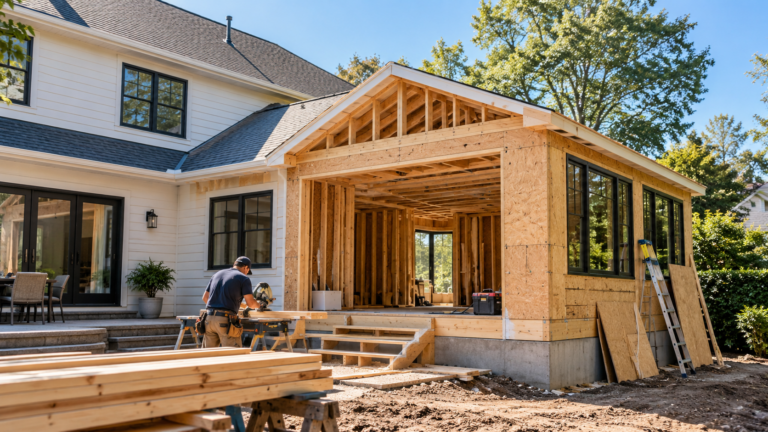
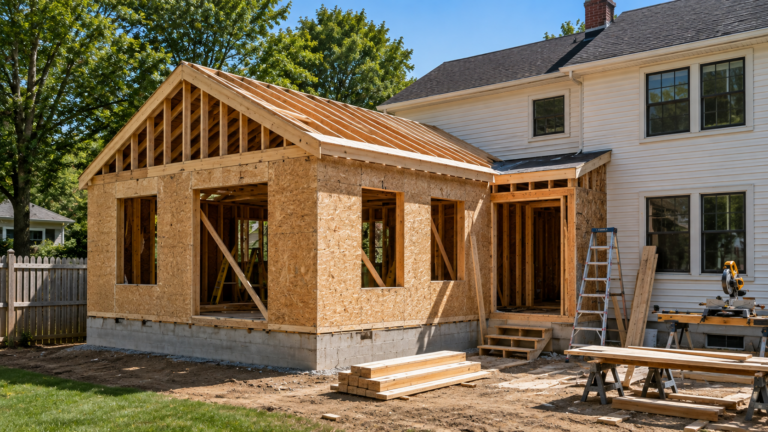
On the other hand, building an addition requires a substantial upfront investment. You need to consider design and engineering, permits, foundation work, framing, roofing, electrical and plumbing systems, insulation, and interior finishes.
The better financial choice depends on the condition of your existing home, the property you own, available financing, and the price of comparable larger homes in your area.
A useful first step is to obtain a realistic construction estimate and compare it with the complete cost of moving—not just the asking price of another house.
3. How Much Does a Home Addition Cost in Hopewell Junction?
The cost of a home addition varies significantly depending on its size, purpose, structural requirements, and finishes.
For preliminary planning, a 2026 Dutchess County construction guide places many residential additions in a broad range of approximately $225 to $425 per square foot, depending on the type of project. This is an indicative regional estimate, not a guaranteed price or a substitute for a property-specific proposal.
For example, the cost of a small bump-out may be very different from a second-story addition or a fully equipped in-law suite.
Some common project types include:
- Room addition: Creates additional space for a bedroom, family room, or home office.
- Kitchen extension: Expands an existing kitchen to provide more counter space, storage, or room for dining.
- Primary suite addition: Adds a larger bedroom, walk-in closet, and potentially a private bathroom.
- Second-story addition: Creates additional living space above an existing portion of the home.
- In-law suite: Provides a more independent living arrangement for extended family.
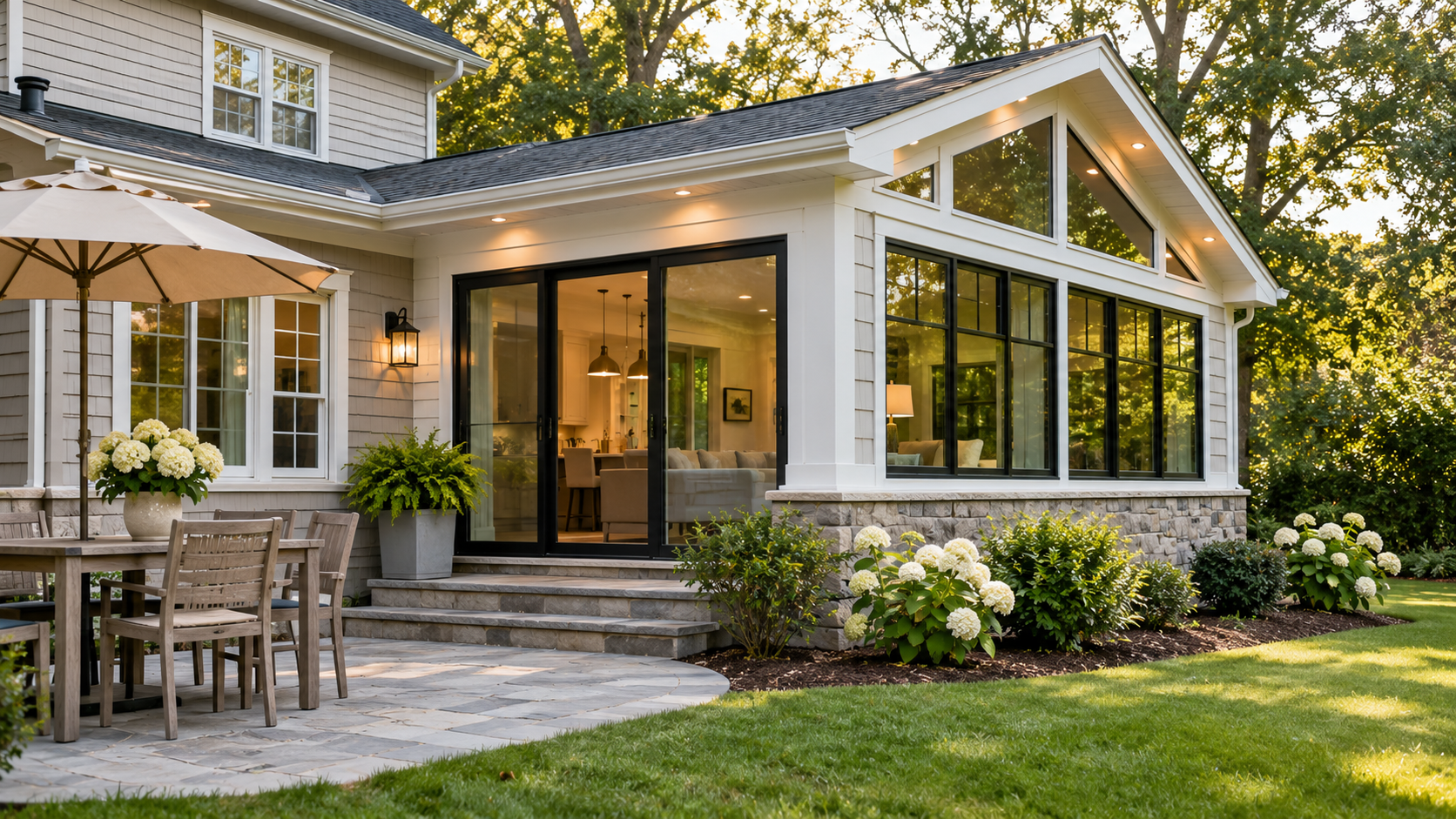
- Sunroom addition: Creates a bright space for relaxation and everyday use.
Several factors can affect the final cost:
Foundation and structural requirements: The addition may require a new foundation, structural reinforcement, or modifications where the new construction connects to the existing house.
Plumbing and electrical work: Adding a bathroom, kitchen, or laundry area can increase the complexity of the project.
Materials and finishes: Windows, flooring, cabinetry, roofing, siding, fixtures, and insulation all influence the budget.
Site conditions: Grading, drainage, excavation, soil conditions, and access to the construction area can affect labor and equipment costs.
Permits and professional services: Architectural plans, engineering, applications, and inspections should be included in the overall project budget.
For properties with private wells or septic systems, additional evaluations may be necessary, particularly when the addition increases the number of bedrooms or plumbing fixtures.
For a more accurate estimate, start with the intended use of the space, approximate dimensions, and the existing condition of your property.
4. Will a Home Addition Increase Your Property Value?
A home addition can increase the appeal and functionality of your property, but it does not automatically mean you will recover the full cost of construction when you sell.
The resale value depends on several factors, including:
- The quality of construction
- The usefulness of the additional space
- The overall layout and design
- The condition of the existing home
- Comparable properties in the neighborhood
- Buyer demand for the type of space being added
For example, an additional bedroom and bathroom may appeal to buyers looking for more functional living space. A well-designed family room can also make a home more attractive to households that need additional common areas.
However, an expensive addition with highly personalized features may not translate into an equivalent increase in market value.
The 2025 Cost vs. Value Report by Zonda and Journal of Light Construction compares remodeling costs with estimated resale value across U.S. markets. Its findings reinforce an important point: the cost of a project and the value recovered at resale are not necessarily the same.
You can review the 2025 Cost vs. Value Report for additional remodeling comparisons.
Before building, consider speaking with a local real estate professional about comparable homes in Hopewell Junction and the features buyers in your area are looking for.
5. Consider the Long-Term Benefits of Staying in Your Home
Financial return is only one way to evaluate a home addition.
If you plan to stay in your property for another five, ten, or fifteen years, the additional space may provide benefits that are difficult to measure through resale figures alone.
For example, a larger kitchen can make family gatherings more comfortable. A dedicated home office can improve your daily routine. An additional bedroom may give children more privacy, while a ground-floor suite could make the home more adaptable as household needs change.
You also avoid the disruption of relocating, adjusting to a new neighborhood, and searching for another property that meets your requirements.
Think about how your household may change over the next several years. A good addition should address your current needs while remaining useful as your lifestyle evolves.
6. Check Zoning and Permit Requirements Before Building
Not every property can accommodate every type of addition. Before finalizing your design, check the applicable zoning, building, and permit requirements.
Hopewell Junction is served by the Town of East Fishkill Building Department. The town provides a specific residential addition application package for projects involving living space and garages.
Depending on the proposed work and your property, you may need to consider:
- Required setbacks from property lines
- Maximum lot coverage and allowable building area
- Structural and architectural plans
- Drainage and stormwater management
- Electrical, plumbing, and mechanical requirements
- Septic capacity and well-related considerations, where applicable
The permit process generally involves submitting the application, completing the required review and inspections, and obtaining final approval.
You can review the official Town of East Fishkill Permit Applications for residential addition requirements.
It is important to confirm the rules that apply to your specific property before construction begins. A design that looks feasible on paper may need adjustments to meet zoning or site requirements.
7. Think About Construction Time and Daily Disruption
A home addition is a major construction project, so it is important to understand how it may affect your household.
Many additions require several months from planning through completion. The schedule depends on the size of the project, permit reviews, material availability, weather, and construction complexity.
During the process, you may experience:
- Construction noise and activity around your home
- Temporary restrictions on access to certain areas
- Dust and debris near the work zone
- Changes to parking or outdoor spaces
- Temporary interruptions to utilities when connections are being completed
Some homeowners can remain in their homes throughout construction, particularly when the addition is built outside the existing living area. However, projects involving major structural changes or extensive interior connections may require additional arrangements.
Discuss the construction sequence with your contractor so you can prepare for the disruption and understand which areas of your home may be affected.
8. When Is Moving a Better Option?
Although a home addition can be a practical solution, it is not always the right choice.
Moving may make more sense if:
Your existing home requires major repairs. If the property needs extensive structural, roofing, plumbing, or electrical work in addition to an expansion, the combined investment may become too high.
Your lot has limited space. Setbacks, lot coverage, easements, or other restrictions may prevent you from building the addition you want.
You need a substantially different location. If your commute, school district, or lifestyle needs have changed, a larger home in another area may be more suitable.
The cost of construction exceeds your budget. If the estimated project cost is significantly higher than the financial commitment of moving, compare both options carefully.
You plan to sell soon. If you expect to move within a short period, you may not have enough time to enjoy the additional space. Also, the resale value may not cover the full construction expense.
The goal is not simply to build more square footage. It is to make a decision that supports your finances and long-term plans.
9. How to Decide if a Home Addition Is Right for You
Before starting a project, evaluate your property and your reasons for expanding.
Ask yourself these questions:
- What specific problem will the addition solve?
- How many years do I plan to stay in this home?
- Can my property accommodate the proposed design?
- How much can I comfortably invest?
- Have I compared construction costs with the total cost of moving?
- Will the additional space be useful to future homeowners?
- Have I considered permits, site conditions, and construction time?
You should also obtain a detailed estimate that outlines the proposed work, materials, labor, exclusions, and expected schedule.
Comparing written proposals with the same project scope will help you understand the differences in pricing and make a more informed decision.
Is a Home Addition Worth It in Hopewell Junction?
For many homeowners, the answer is yes—provided the project is financially realistic, properly planned, and suited to the property.
A home addition can offer more than additional square footage. It can give your family room to grow, improve your daily routines, and allow you to remain in a neighborhood you already enjoy.
However, the best decision comes from weighing the construction investment against the cost of moving, the potential resale value, and the long-term benefits of staying in your home.
If you’re considering a home addition in Hopewell Junction, NY, Antonjo Construction can help you explore your renovation goals and the next steps involved in planning your project.
Ready to create more room for your family? Contact Antonjo Construction to discuss your home addition plans.